France
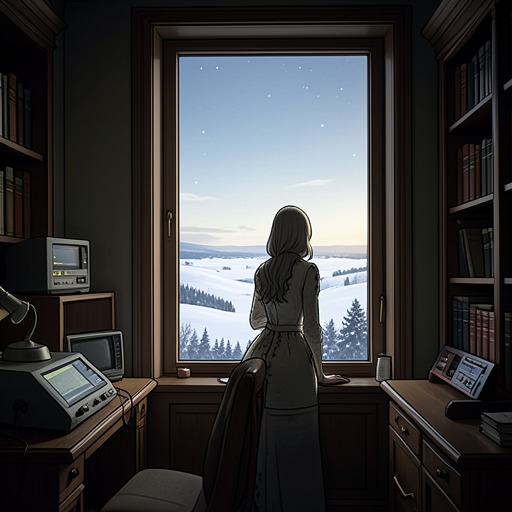
Winter in SokchoFrance matters in the novel less as a visited setting than as a place held at a distance: the home Yan Kerrand has left, the destination the narrator imagines, and a possibility she cannot bring herself to pursue. Through their conversations about language, travel, and artistic work, France becomes a measure of both connection and separation. It promises a world beyond Sokcho, but the narrator’s attachment to her mother makes that promise difficult to act on.
Kerrand’s Home and Working Life
Kerrand arrives at the guest house as a Frenchman from Granville, carrying a passport that identifies his origin before the narrator knows anything about him. His arrival also brings the French language into her immediate surroundings. Although she is more capable in French than English, she feels intimidated by the thought of speaking it with him. Her hesitation matters: shared language offers a possible intimacy, but does not automatically make her feel at ease. At first, she also withholds the thought of telling him about her father, deciding that Kerrand does not need to know. France is therefore associated with an unspoken personal history as well as with the visitor’s nationality, without the novel making that history explicit.
The narrator later asks Kerrand what France is like. He cannot reduce a large and varied country to a single description. He speaks instead of particular pleasures and impressions: its food, and the grey, dense light of Normandy. If she visits, he offers to show her his studio. The offer makes France concrete without turning it into a simple promise of escape. It is a place of daily life and artistic work for Kerrand, not merely a distant national emblem. When the narrator asks whether he has set any of his books in Normandy, her question connects the landscape he describes to his creative practice; the evidence establishes the question, but not his answer.
Language, Desire, and the Possibility of Departure
For the narrator, French has a history of its own. She explains that she studied it so she could speak a language her mother would not understand. The choice gives the language an intimate and potentially private function: it can open communication with Kerrand while also marking out a space beyond her mother’s comprehension. Yet her fluency remains unevenly available to her. She admits that her French is better than her English, but still feels intimidated speaking it with him. The language promises access without guaranteeing confidence or closeness.
France also becomes a future the narrator allows herself to name. She tells Kerrand that she would like to see the country and perhaps spend some time there. She does not tell him that she feels unable to leave her mother. The distinction between what she says and what she withholds gives the prospect its emotional weight: travel is conceivable, but it is bound up with a family responsibility she does not disclose. Much later, during a quiet spell at the guest house, she looks through job advertisements in Sokcho, reads accounts of Kerrand’s stories, and checks airfares to France. She calculates how long she would have to work before she could leave, even as she knows she will not do it. France appears in that moment as a destination measured in money and time, and as a plan whose arithmetic cannot overcome her own certainty that she will stay.
France and the Unfinished War
The narrator’s reflections on France also sharpen the contrast between Kerrand’s background and life in Sokcho. Speaking to him about the beaches, she distinguishes wars that may have left scars but belong to the past from the Korean conflict, whose ending remains unresolved. The beaches around Sokcho are still watched by electrified barbed wire, and the border with North Korea is close enough to shape an ordinary walk along the coast. The narrator describes life there as a continuing state of suspension, rather than as a war safely contained in history. Her words position France not as a fully explained national history, but as the implied elsewhere against which she insists on the present reality of the peninsula.
That difference becomes tangible during the trip to the border. A checkpoint requires forms and imposes rules against photography, filming, leaving the marked path, or making noise. Beyond it, the visitors cross a wide, empty no man’s land under military escort, then reach a lookout where coins buy a view through binoculars. Fog obscures much of what they have come to see. At the museum, Kerrand listens as the narrator translates an account of the war’s beginnings, the 1953 armistice, the heavily militarized frontier, and the absence of a peace treaty. The visit gives the contrast between France and Sokcho a specific setting: the border is simultaneously a managed tourist destination and a political condition that local people continue to inhabit.
A Destination Left Unreached
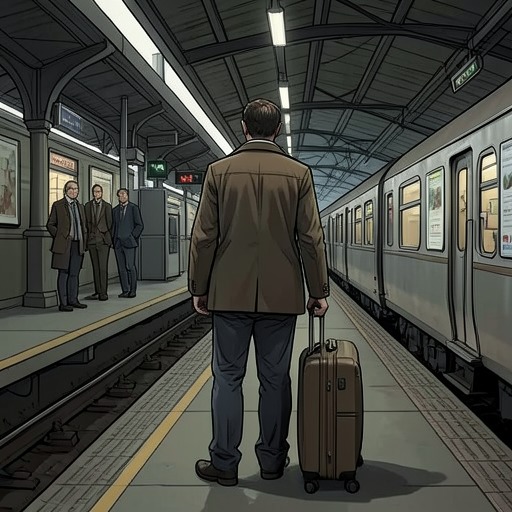
France remains a possibility rather than a completed journey. Kerrand eventually tells the narrator, in French, that he has been too absorbed in his hero for too long and has decided to return to France. He says he will leave in four days and will not waste more of her time. His decision makes France the direction of his departure, while the narrator remains behind in Sokcho. The reversal is quietly painful: she has pictured going to his country, but it is Kerrand who leaves, and she curls up under the covers after hearing the news.
The novel does not show the narrator reaching France, nor does it resolve the reasons she feels unable to leave her mother. Instead, the country holds several meanings in tension: Kerrand’s home and studio, a language the narrator has pursued for private reasons, and a destination she researches but cannot make into action. Set against Sokcho’s winter and the border’s unresolved suspension, France represents movement without becoming an escape the narrator actually takes. Its significance lies precisely in that gap between imagining departure and remaining in place.